
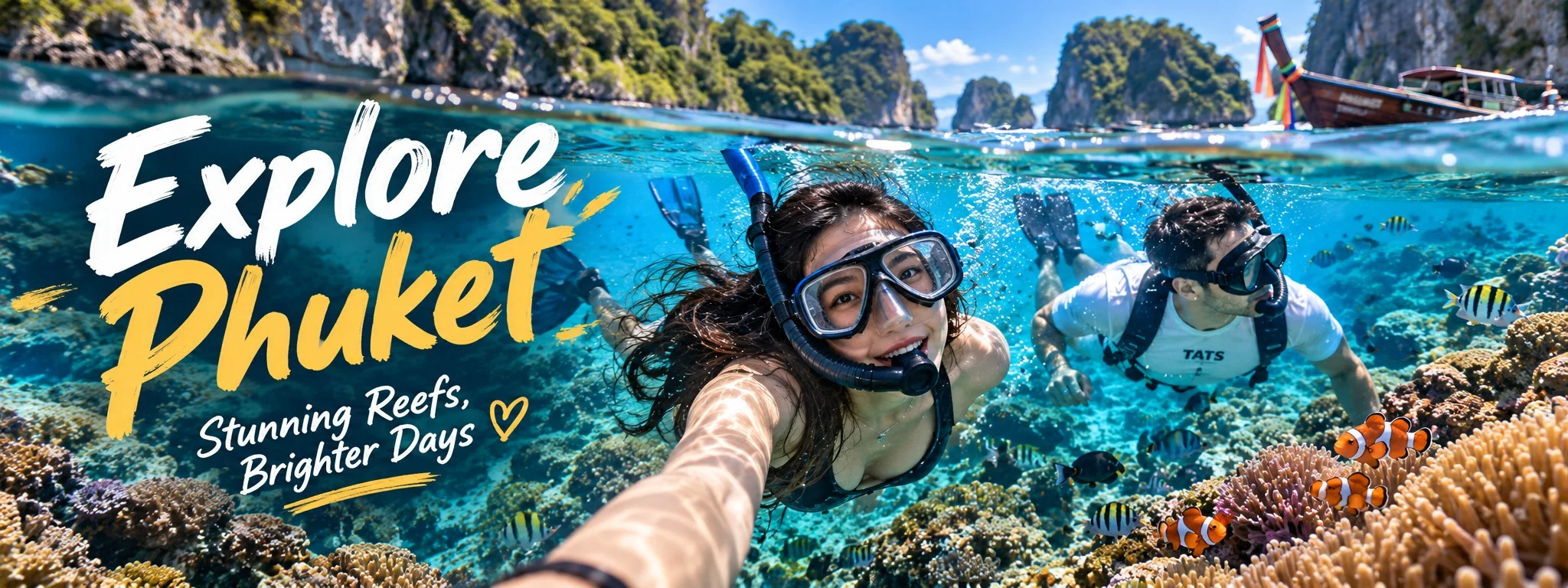
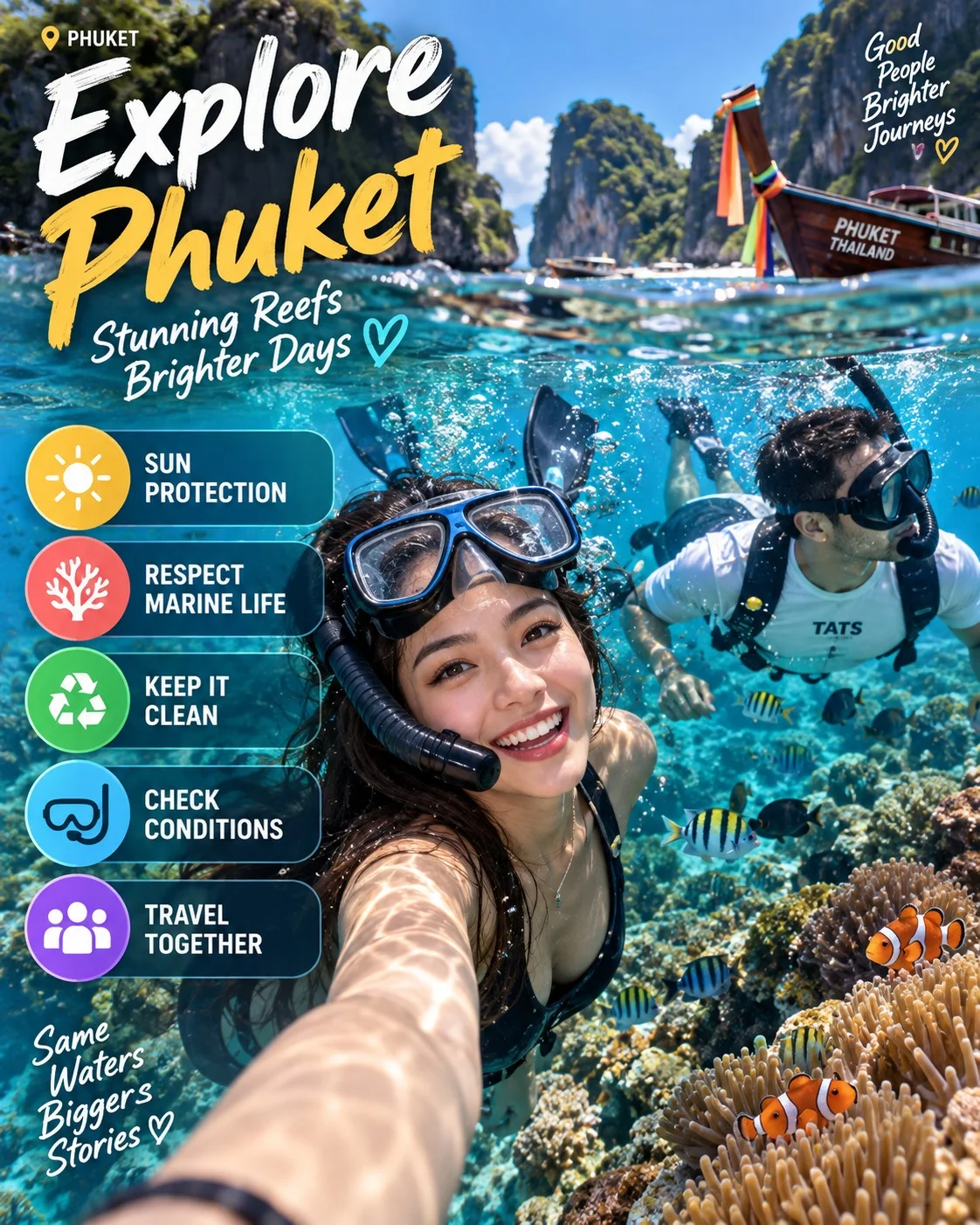
Reef-safe sunscreen matters more in a destination like Phuket than in many others, given how much of the island's appeal depends on healthy coral reefs around its nearby islands.
Why standard sunscreen is a problem
Certain common sunscreen chemicals (oxybenzone and octinoxate are the two most frequently cited) have been linked to coral bleaching and reef damage at scale, given how many snorkellers and divers wear sunscreen into the same waters daily.
What to look for on a label
"Reef-safe" or "reef-friendly" labelling isn't strictly regulated everywhere, so checking the actual ingredient list for oxybenzone and octinoxate specifically is more reliable than trusting marketing language alone. Mineral-based sunscreens (zinc oxide or titanium dioxide as the active ingredient) are the more consistently reef-safe option.
Where this is actively enforced
Some marine parks and specific tour operators, including trips to more sensitive reef areas like the Similan Islands, have begun restricting non-reef-safe sunscreen — worth checking your specific tour's policy rather than assuming it's optional.
Beyond sunscreen
Not touching or standing on coral while snorkelling, and not feeding or handling marine life, are equally important — sunscreen chemicals are one part of a broader set of everyday choices that affect reef health around the island's more visited dive and snorkel sites.